


Getting Your IR Lamps to Actually Work With Your Glass
Here is the problem with standard infrared lamps: they’re often just shouting into the void. They pump out energy, but if that energy doesn’t line up with what your glass actually wants to absorb, most of it just bounces right off. Imagine your lamp is hitting at 2.0 microns, but your specific glass additives are only listening at 3.5. You’re paying for the power, but the glass isn’t taking it. We fix this by tuning the infrared spectrum to match the actual chemical “fingerprint” of your glass.
It’s Not About Brute Force
We don’t just crank up the wattage and hope for the best. That’s a recipe for disaster. Instead, we mess with the filament material and the quartz envelope doping to shift where the emission peaks. By hitting the right wavelength, we can target the molecular vibrations of the additives in your melt. The result? The heat actually sinks deep into the glass slab. You stop scorching the surface and start heating the core. It makes a world of difference when you’re trying to avoid thermal shock or those annoying surface defects.
The Trade-off
Now, there is a catch. When you tune a lamp for a specific absorption peak, you lose some of that raw, wide-band “punch.” You’re trading brute force for precision. Because of that, you’ll probably need more lamps per zone to keep your throughput where it needs to be. Just a heads-up: make sure your power distribution board can handle the extra load before you start swapping things out.
What Happens on the Floor
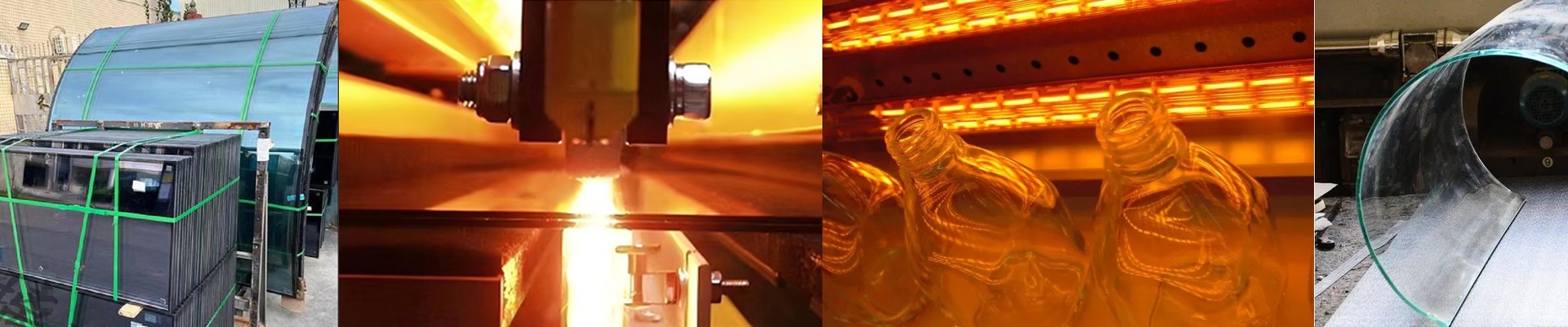
Once you get these tubes into your lehr, you’ll see it immediately. The temperature profile across the thickness of the glass looks way more uniform. We usually pair these with high-precision PID controllers so you don’t accidentally overshoot your targets. But remember, these are specialized tools. Because they’re tuned to a specific chemistry, they aren’t “one-size-fits-all.” If you switch your glass type or change your additives, you’ll need to swap the lamps. It’s the only way to keep your annealing cycles precise when you’re working with specialized materials.