Stop Your Glass From Cracking: A Real-World Guide to Annealing
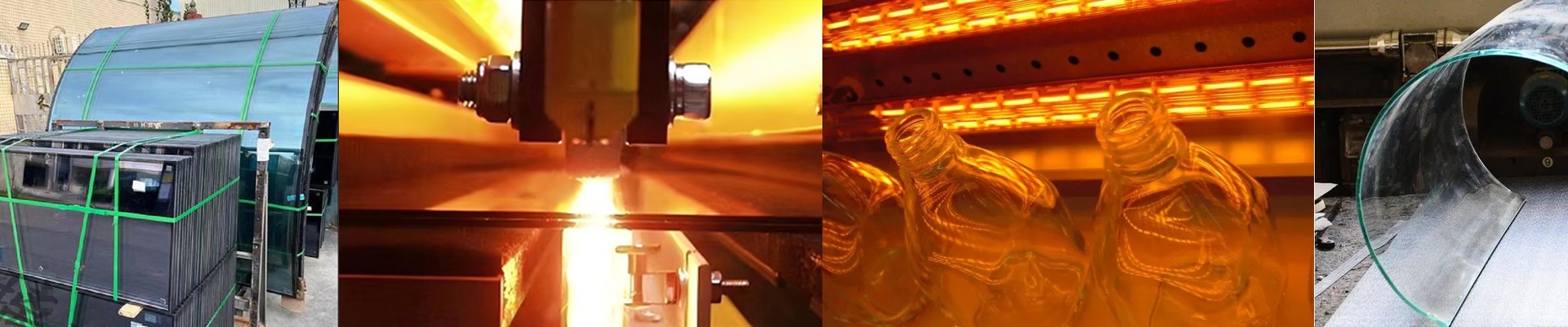
If you’ve ever seen a piece of glass shatter the second it hits the heat, you know that feeling. It’s frustrating. It’s a waste of material. And usually, it happens because the temperature jump was just too aggressive. When the outside of the glass expands way faster than the inside, it gives up. That’s thermal shock. To stop it, we use shortwave infrared (IR) lamps. The secret isn’t just the heat—it’s how fast you can control it.
Why standard heaters don’t cut it
Most resistive heaters are just too bulky. They have a lot of “thermal mass,” which is a fancy way of saying they stay hot long after you flip the switch. You can’t just tell them to stop. IR lamps are different. They hit operating temperature in milliseconds. When you pair these with an SCR or a fast-switching power supply, you get total control. You can dial the heat up or down on a dime. This lets you do a “soft start.” Instead of blasting the glass, you ramp up the power slowly. You give the surface a chance to catch up with the core, and suddenly, those cracks disappear.
The hardware side of things
To get enough punch for industrial work, we lean on high-wattage halogen quartz tubes. They put out energy in a specific band that glass just loves to absorb. But here’s the catch: all that power creates a lot of stress on the gear. When you’re running at full tilt, the sockets and the ends of the lamps really take a beating. **Don’t ignore your airflow.**If you don’t have active cooling or a good breeze moving through the housing, your reflectors will warp and your wiring might actually melt. It’s not a pretty sight.
Making it work on the shop floor
We like to keep things simple. We use standard R7s or Sk15 connectors. Why? Because lamps eventually burn out. When one goes mid-cycle, you want to be able to swap it out in seconds, not spend an hour tearing your oven apart. If you want this to actually work without you babysitting it, pair the lamps with a pyrometer and a closed-loop PID controller. That way, the system reacts to the actual temperature of the glass, not just a timer on a wall. It’s the difference between guessing and knowing.