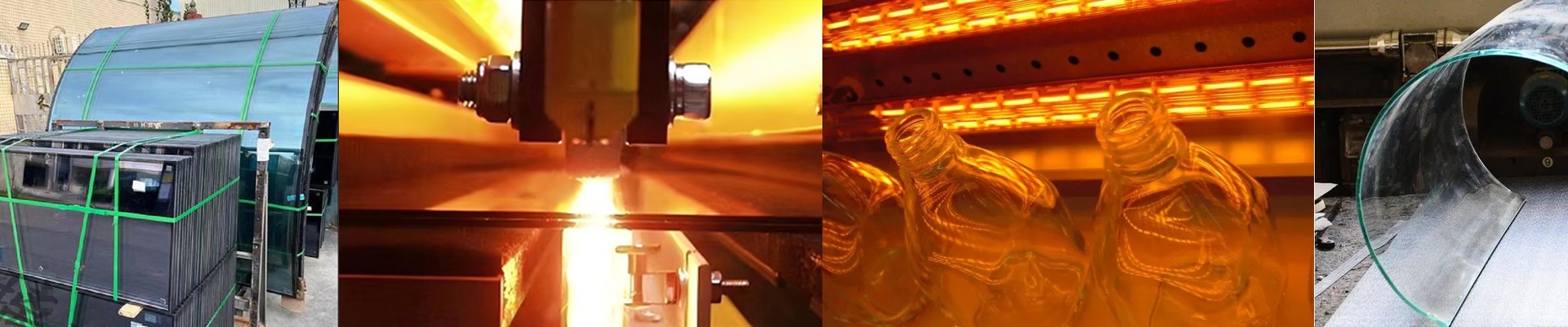
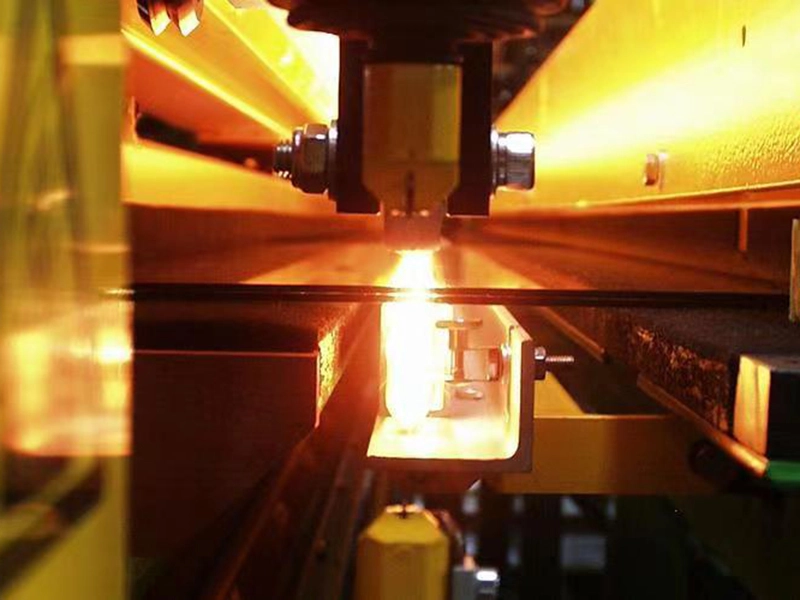
On a bending line, uneven heat doesn’t hide. You see it immediately—optical distortion, edge waves, thermal stress cracks that show up right at final inspection and scrap glass that should have passed. Convection ovens try to close the gap, but they’re slow to respond and burn money on air. We built a heating approach that puts control back where it belongs: straight into the glass, with a thermal field that stays uniform across the entire bend zone. What matters, technically We run short-wave quartz infrared emitters tuned to glass emissivity, so the energy goes into the sheet instead of heating furnace walls. The system is modular and scalable, typically sized from 12 kW to 120 kW, 400 V three-phase, and engineered to drop into existing bending furnaces or retrofit zones. Each zone is independently controlled, holding setpoint within ±3°C across the glass surface. Warm-up is fast—often under 120 seconds from cold to process temperature—and repeatability is tight enough to keep bend consistency shift after shift. Why it holds up on the line When the center and edges hit forming temperature together, the glass yields predictably. No over-bending at the edges, no stretching in the middle. That means fewer rejects from optical defects and stress fractures, and cycle time drops because you’re not waiting for the furnace to chase temperature. At the same time, direct radiant transfer can cut energy draw on the line by up to 30% in many high-power bending setups, which lowers kWh and helps with peak demand charges. Fewer rejects, fewer reheats, fewer jam-ups. What you need to plan for Installation is straightforward on most lines, but clearances matter. Emitter-to-glass distance and reflector geometry set the uniformity, so we size the module to match your glass thickness and minimum bend radius. Expect a lead time for custom zone layouts, and keep in mind ambient dust and cooling airflow can shorten emitter life if they aren’t managed. We match connectors and mounting to your furnace footprint, but a short shutdown is usually required for the retrofit.