Getting Glass Annealing Right with IR
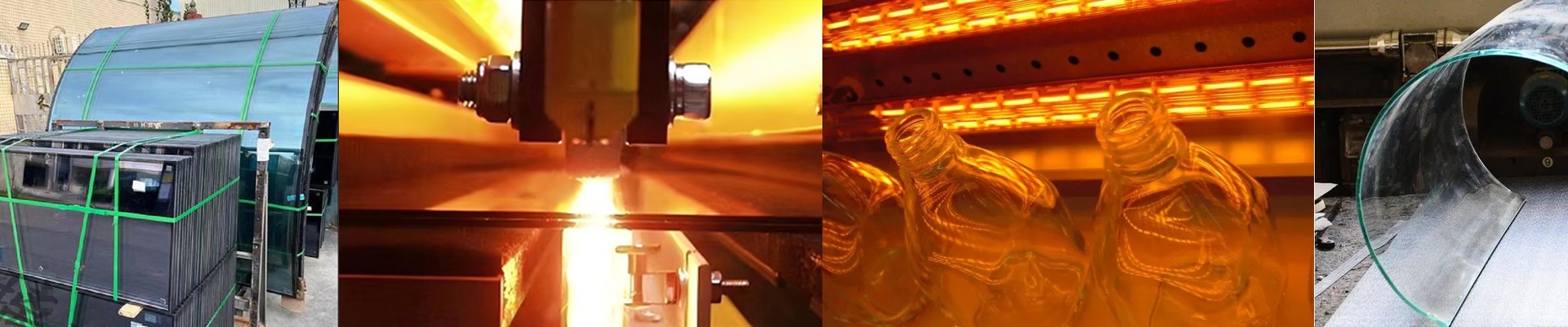
If you’ve ever had a piece of lab glassware spontaneously shatter under a vacuum, you know exactly why we’re talking about this. It’s a nightmare. Usually, it happens because the glass was cooled too fast or the temperature spiked during annealing, baking internal stress right into the walls. That’s why we use high-precision infrared (IR) elements. They’re just faster. While old-school resistive coils take their sweet time to react, IR hits the mark almost instantly.
Why we obsess over 0.1°C
Glass is finicky. It doesn’t just “warm up” linearly. A tiny swing of a few degrees can be the difference between a perfect vessel and a pile of expensive scrap. We aim for 0.1°C stability. Why? Because we need the entire piece—every curve and corner—to reach the same thermal equilibrium. If you have “cold spots,” you have stress points. And stress points are where the cracks start. Plus, we use shortwave IR. It actually sinks deeper into the glass than longwave radiation does. This means we can heat the core of a thick-walled flask without accidentally scorching the outside.
Killing the stress fractures
To stop those dreaded fractures, you need a ramp-down that’s smooth as silk. We pair our IR elements with PID controllers and thermocouples that react in real-time. The beauty of the IR lamp is the agility. If a sensor picks up a 0.2°C spike, the power drops immediately. No waiting around. You just can’t do this with a traditional muffle furnace. Those things have way too much thermal mass. They lag. IR doesn’t.
The catch (because there’s always one)
Here’s the thing: this kind of precision puts a lot of pressure on your power supply. If you want that 0.1°C stability, you can’t have “dirty” power. You need a clean, ripple-free DC source or a high-end SCR. If your grid has noise, the lamp will flicker. It’s subtle, but it ruins the precision. Basically, your electrical filtering has to be just as sensitive as your sensors, or the whole system falls apart.