Stop the Cracks: Getting Your Glass Annealing Right
There is nothing worse than spending hours on a batch of borosilicate glassware only to have it shatter for no apparent reason. Usually, it’s because the internal stress didn’t get neutralized. If your oven swings by just a few degrees, you’re playing a dangerous game with your equipment. That’s why we use high-precision infrared elements. We keep the temperature window within 0.1°C. It sounds like a tiny number, but it’s the difference between a perfect piece of lab glass and a pile of expensive shards.
Why 0.1°C Actually Matters
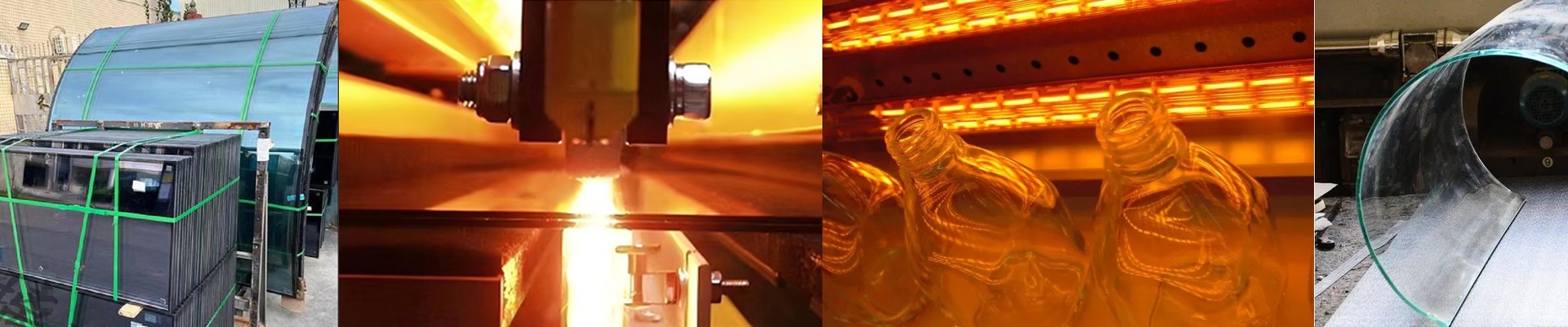
Most heating elements just click on and off. This creates a “sawtooth” effect where the temperature bounces up and down. For precision annealing, that ripple is just too wide. We do things differently. We use short-wave IR lamps paired with high-frequency PID controllers. Instead of waiting for the air to heat up and slowly circulate—which takes forever—the IR energy hits the glass wall directly. It’s nearly instant. The second a sensor picks up a 0.1°C drop, the lamp ramps up. This keeps the glass from crossing the strain point too fast, which is where most of the trouble starts.
The Trade-off: Heat and Airflow
Here is the catch: those lamps pack a punch. They deliver concentrated energy, which is great for speed, but it creates an intense amount of heat right at the lamp surface. You can’t just throw these into any old box. You have to make sure your oven chassis and ventilation can handle that localized heat. If your airflow gets blocked, your lamps will burn out way sooner than they should. We usually stick with quartz-halogen tubes because they just hold up better over long cycles.
Getting the Finish Right
We plug these lamps into the final stage of production. The real magic happens when we control the cool-down—specifically that slide from the annealing temperature down to the strain point. When you get that transition right, the molecular structure of the glass stays uniform. You end up with a product that can actually handle autoclave cycles and harsh chemical reactions without snapping. At the end of the day, it’s all about matching the IR output to the mass of your glass. Simple, but it works.