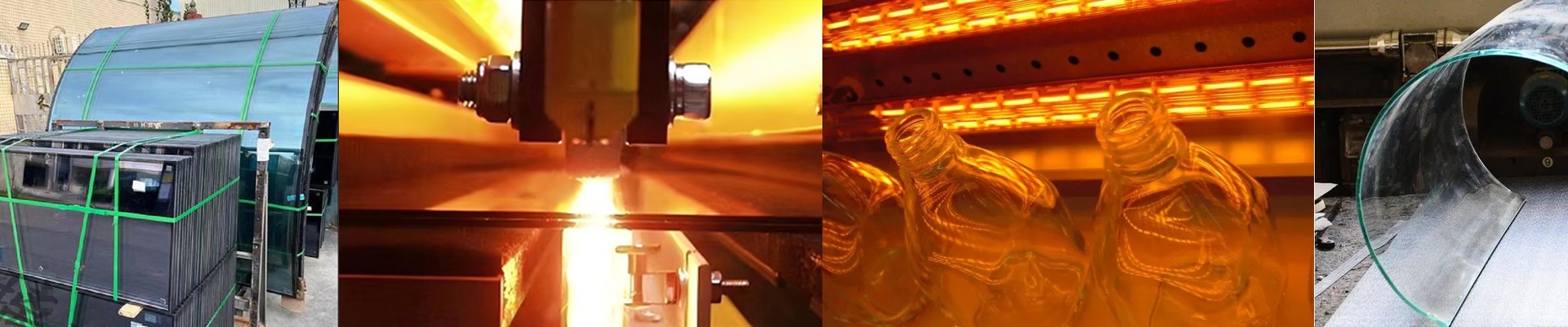

Out on the line, the heat profile has to land on setpoint and hold steady across the glass—no drift. When the lamp can’t keep up, you end up with uneven temper, stress fractures, and cycles that drag. We built our gold-coated infrared lamp to run the way a glass plant actually needs: stable, repeatable, and efficient. What matters under the hood That gold coating isn’t for looks. It boosts reflectivity in the near-infrared and drops emissivity, so the energy goes into the glass instead of bleeding off into the surroundings. The quartz envelope transmits short-wave IR and responds quickly, and the filament geometry is laid out to give you a uniform thermal field. In practice, that translates to tighter temperature control across the sheet, less edge cooling, and fewer rejects from thermal stress. The specs are matched to production reality: standard voltages, compact form factors, and terminals built to hold up in existing fixtures. Here’s why it holds up in real work. In tempering, the quench only works if the heating is consistent. This lamp delivers the heat density you need for rapid, even heating, so bow and warp stay in spec. In lamination—EVA, SGP, or PVB—the adhesive has to hit the flow window fast and even. The focused IR profile shortens the ramp and keeps throughput up without scorching. For coating drying and insulating glass sealing, the same control cuts down bubbles, pinholes, and seal failures that come from hot spots. You get faster cycles, lower kWh per part, and fewer lamp changes. A few shop-floor notes. These lamps fit most standard IR fixtures, but mounting and reflector geometry have to be aligned. If the focus is off, the belt profile changes and you can get stripes. Keep the surface clean—dust and overspray kill reflectivity. There’s a warm-up window before the setpoint settles, so plan your dwell time with that in mind. And schedule replacements around preventive maintenance so you don’t get blindsided by downtime.