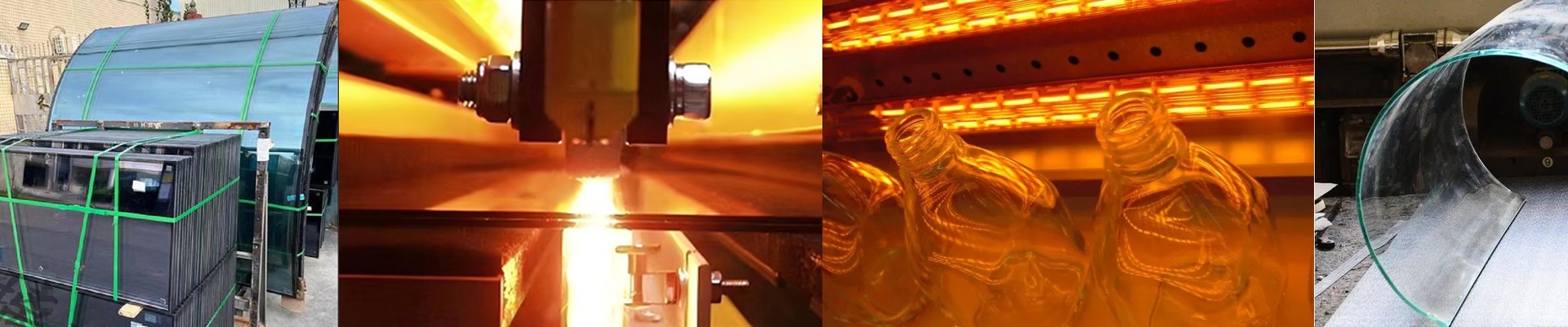
Stop Dealing with Cold Spots in Your Glass Annealing
Ever pull a piece out of the kiln only to find a couple of stubborn “dead zones” where the glass just didn’t hit the right soak temperature? It’s a nightmare, especially with complex shapes. Standard heating elements are great, but they leave gaps. You end up with cold shoulders or bases, and that’s how you get cracks. We’ve found a way to fix this using targeted infrared lamps and SK15 ceramic holders. It’s a straightforward setup that actually covers every inch of the glass. Getting the heat where it actually needs to go The trick to killing those dead zones is high-density infrared radiation. Unlike convection air, which can be lazy and miss the tight spots, short-wave or medium-wave lamps punch right through the surface of the glass. If you arrange these lamps in a multi-angle array, you can aim them exactly at the trouble spots. You’re basically sniping the cold areas with heat. Why we swear by SK15 ceramic holders Here’s the thing: the heat in an annealing cycle is brutal. If you use plastic or some cheap composite, they’re going to melt or burn out. Period. Ceramic is the only way to go. It doesn’t warp, and it doesn’t degrade the electrical connection even when things get scorching. Plus, the SK15 footprint is rock solid. It holds the lamp tight, which is a big deal when your kiln is humming along 24/7. If a lamp shifts even a tiny bit, your heat pattern drifts. And in this business, a drift in temperature usually means thermal shock and a wasted piece of glassware. A few things to watch out for Now, you can’t just keep adding lamps indefinitely. More lamps mean more wattage. Make sure your power supply can handle the load and that your cooling fans are actually doing their job. If you pack the array too tight without enough airflow, you’re going to trip your breakers or fry the ends of your lamps. My advice? Use high-temp leads and set up the SK15 holders in a modular grid. It makes life so much easier. When a tube eventually burns out, you can just swap it in a few minutes without having to tear apart the entire kiln wall.