Dealing with those annoying “dead zones” in your glassware
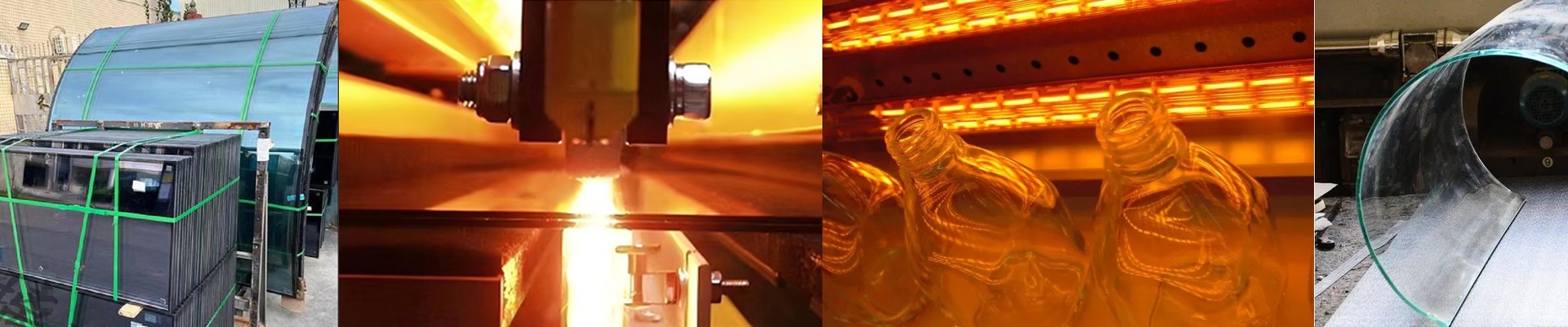
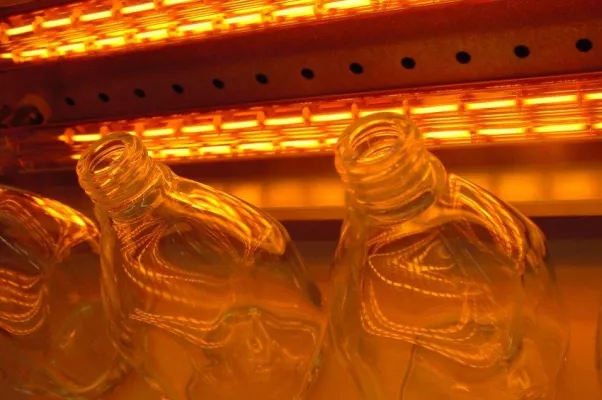
Ever notice how some pieces of glass just won’t heat evenly? If you’re working with complex shapes—think narrow necks or deep recesses—standard annealing lehrs often struggle. The hot air just can’t get into those tight spots. We call these “temperature dead zones,” and they’re a nightmare for quality control. To fix this, we use shortwave infrared (IR) lamps. Unlike convection, IR radiation doesn’t care about the air temperature. It just shoots energy straight into the glass surface. It’s direct, it’s fast, and it actually works. Getting the heat where it needs to go We don’t just throw a few lamps in there and hope for the best. We set them up in staggered arrays. Because shortwave emitters pack a punch, they can penetrate thick-walled glass without wasting time. The real trick is the angle. By tilting the lamps, we can hit those “shadowed” areas that usually stay cold. This stops those hidden internal stress points from forming, which means you stop seeing those frustrating cracks during the cooling phase. The nuts and bolts We use quartz envelopes because, frankly, the heat required to soften glass would melt anything else. These lamps are snappy—they hit full power in seconds. This is great because you can tweak the heat on the fly as the glass moves down the line. And we kept the wiring simple. We use standard industrial connectors, so when a tube eventually burns out, you can just swap it for a new one and get back to work. No drama. A few things to watch out for Now, there is a trade-off. High-wattage IR arrays pull a lot of power. Before you dive in, double-check your electrical cabinet. You’ll want to make sure your power supply and wiring can handle the peak current draw without tripping a breaker. Also, be careful not to overdo it. If the lamps are too close or too intense, you’ll get hot spots, and your glass might start to deform. It’s all about the balance. Match your lamp intensity to your line speed, and you’ll get a smooth, steady thermal gradient every time.