Why we use gold-coated emitters for continuous glass annealing
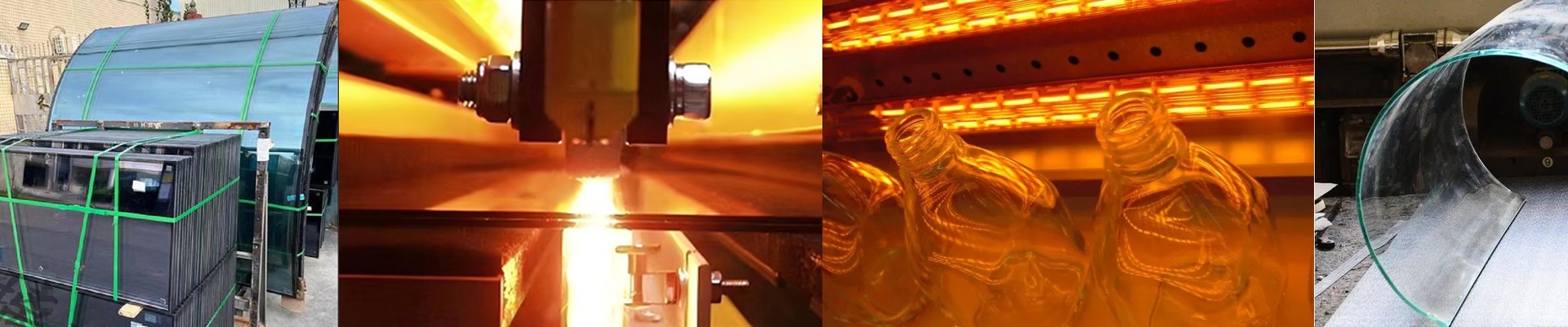
If you’ve ever worked with glass, you know the nightmare of internal stress. One tiny temperature slip and—crack—there goes your workpiece. To stop that from happening, you need precise heat. But in a fast-moving production line, you can’t just sit around waiting for old-school resistive heaters to warm up. They’re too slow. That’s why we lean on gold-coated shortwave infrared (SWIR) emitters. The secret is in the gold. Most quartz lamps throw out a wide mix of infrared radiation. By adding a thin layer of gold to the quartz, we basically tell the longwave heat to “turn around” and go back into the filament. This pushes the output into the shortwave spectrum. Here is why that actually matters for you: shortwave IR doesn’t just sit on the surface. It punches through the glass and turns into heat almost instantly. You can ramp up your temperatures in seconds. No lagging. No waiting. Your line just keeps moving. Handling the heat These emitters run hot. Really hot. That’s the only way to get the kind of power density you need to heat glass while it’s flying past on a conveyor. Since the heat moves via radiation rather than air, the response is basically instant. If you need to adjust for a change in line speed, you just tweak the SCR controllers and it happens right then and there. One heads-up, though: don’t ignore your cooling. The gold makes the heat delivery to the glass incredibly efficient, but the lamp housing still takes a beating in a factory environment. Make sure your ventilation is actually up to the task, or you’ll be replacing burnt-out sockets way more often than you’d like. Making it work on the floor The best part? You don’t need those massive, sprawling annealing lehrs taking up half your warehouse. You can set these lamps up in modular banks. It keeps your footprint small and your workflow tight. And if a lamp finally gives out? You just pop it out and drop in a new one. It gets rid of those annoying bottlenecks you find with batch annealing. Instead, you get a steady, continuous flow of stress-free glass and a lot less anxiety about your thermal tolerances.