
Keeping Your Industrial Heaters Dry (And Alive)
Let’s be honest: most infrared heaters hate water. If you put a standard unit in a humid shop or somewhere splashes happen, it’s basically a countdown to a breakdown. You get short circuits, rusty contacts, and filaments that burn out way before they should. It’s a headache nobody needs. That’s why we focused on IPX5 waterproofing.
What does IPX5 actually do for you?
In plain English, IPX5 means we can hit this thing with water jets from any angle and it won’t blink. We didn’t just slap some tape on it; we used high-temperature silicone gaskets at the joints and waterproof cable glands to lock everything down. This keeps the moisture far away from your wiring and sockets. But there’s a bigger reason for this. Think about a red-hot quartz tube. If a stray drop of water hits that glass, it doesn’t just evaporate—it causes thermal shock. The glass stresses out and cracks. Simple as that. By keeping the housing splash-proof, we keep the element dry, and your glass stays in one piece.
The battle against fog
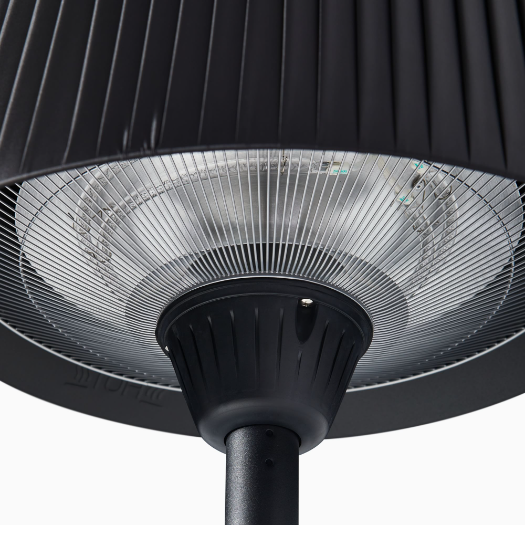
Then there’s condensation. It’s the silent killer. When the heater cycles off and cools down, moisture loves to settle on the surfaces. If your reflector or lens fogs up, your heat distribution goes sideways. You end up with cold spots and inconsistent results. To fix this, we added hydrophobic coatings to the outer guards. Instead of forming a foggy film, the water just beads up and rolls right off. It keeps the path clear, so the heat gets where it needs to go. Plus, you don’t have to spend your shift scrubbing the units.
A few things to keep in mind
Now, no design is perfect. There are some trade-offs. Since we’ve put a protective barrier between the heater and your target, the radiation pattern shifts a bit compared to an open-element heater. You might need to nudge your mounting distance a little to get the exact temperature you’re looking for. Also, a sealed box traps heat. We used materials that can handle that “heat soak” without warping, but you’ve still got to make sure your airflow is clear. Don’t block the vents, or you’ll be fighting the physics of the box.