
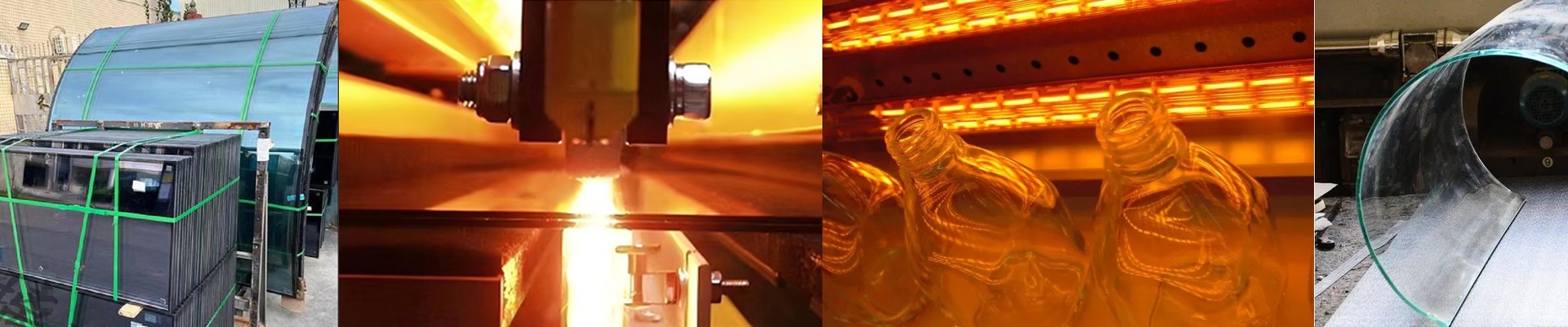
On the glass line, heat control isn’t a preference—it’s the line between good parts and scrap. Whether you’re tempering, bending, or drying coatings, uneven temperature or a laggy response drags throughput down and sets you up for thermal stress fractures. The infrared lamp reflector we’ve been running with puts repeatable heat right where the process needs it, and you can see the performance on the machine, in the numbers. Here’s what actually matters under the hood. The reflector focuses short-wave infrared energy with tight directionality, hitting the glass surface while keeping convection losses low. It ramps at 15°C/s, so you hit setpoint fast without waiting for the whole oven to settle out. Temperature uniformity across the irradiated zone holds at ±3°C, which cuts down hot spots that cause bow and optical distortion. Power density is tuned to 40–60 kW/m²—enough flux to heat rapidly, but still within safe thermal loads for the substrate. The quartz reflector body keeps emissivity stable over long runs, and the module takes 240 V/480 V with standard industrial connectors, so integration is straightforward. Why this works in real processes: in tempering, the surface has to hit tempering temperature quickly and evenly to lock in compressive stress. In bending, you need controlled heat to shape without thinning or wrinkling. For lamination prep and coating drying, you need fast, localized drying that avoids bubbles and haze. This reflector shortens cycle time, tightens flatness tolerances, and saves energy because it puts heat on the glass, not the whole chamber. Units have run 5,000+ hours with less than 5% output drop, which means fewer replacements and less downtime. A few shop-floor details to keep you out of trouble. Clearance matters—keep at least 25 mm to adjacent components for airflow and to keep nearby insulation from overheating. The reflector plays nice with most OEM heating zones, but verify mounting geometry and aperture size before you changeover. Expect peak reflector temperatures to run higher than you’d see with mid-wave designs. Keep the thermal shielding in place, and confirm your guard materials can handle the thermal load.