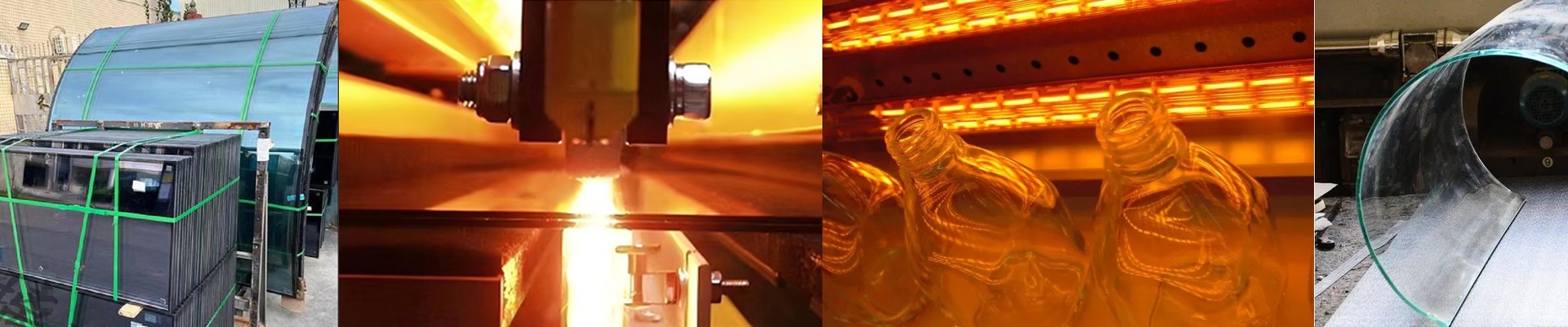
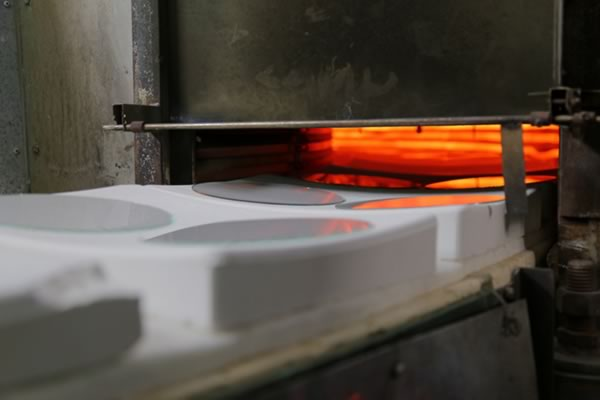
On the tempering line, the gob hits the furnace at full speed. If the preheat profile wanders even a little, the glass drags thermal stress right into the quench—and your yield takes a hit. We designed our gob heating infrared lamps to keep that thermal window tight, repeatable, and fast. What matters, technically These are short-wave infrared lamps with a high-purity quartz envelope, so they respond quickly and lay down a clean thermal profile. The filament geometry and reflector layout are tuned to give a uniform thermal field across the gob, which cuts down hot spots and edge losses. In practice, the surface hits setpoint fast—no unnecessary soak time. We size the system to match line throughput: the power density supports fast cycles, and the control interface holds temperature in a narrow band. Energy use comes down because the lamp heats on demand, instead of keeping a big chamber hot. Why it works in real production Gob heating isn’t just warming glass—it’s stabilizing the entry condition so the temper is consistent. With this lamp, the furnace sees a more consistent thermal load, so bending and tempering parameters stay put shift after shift. That means fewer optical defects, better bow control, and less scrap from thermal shock. It also drops in as an upgrade on a lot of existing lines, so you can improve repeatability without reworking the whole machine footprint. What to watch on the floor Mounting and alignment matter. The lamp has to hit the target zone clean—no shadowing and no reflector misalignment—and that quartz envelope needs protection from contact and contamination. Keep the power supply matched to the lamp rating, and make sure cooling is set up properly; otherwise, control stability goes sideways. Treat the lamp like a tuned component, not just another heat source.